


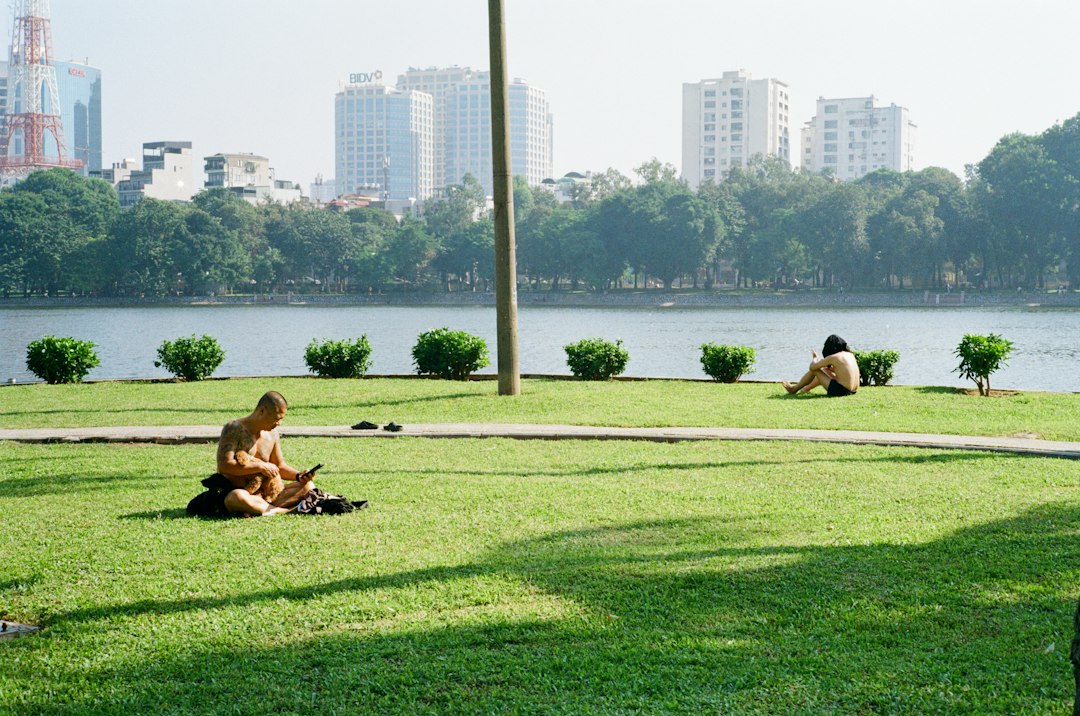
Digital detox living begins the moment someone looks down at the glowing rectangle in their palm and wonders quietly how much of their actual day has been handed over to invisible currents. We live in a culture that measures attentiveness by how quickly we respond to a ping, a ding, or a red notification badge. Over time, this constant availability wears a distinct groove into our patience. People find themselves reaching for a device not out of curiosity or desire, but from a twitchy, conditioned reflex that leaves them feeling hollowed out by sunset. It is an exhaustion born less of heavy labour and more of perpetual, low-grade interruption.
The motivation behind stepping away from constant connectivity rarely stems from an abstract philosophical dislike of technology. Instead, it arises from the heavy friction of work spillover and relentless social pressure. When the office chat app remains open on the kitchen table alongside the evening meal, the boundary between earning a living and inhabiting one dissolves entirely. People report a creeping sense of fragmentation, where no single moment belongs completely to the person experiencing it. There is an unspoken expectation to be constantly reachable, a demand that quietly erodes the capacity for undisturbed thought and quiet reflection. Reclaiming private time becomes an act of quiet preservation rather than a trendy lifestyle choice.
Attention fatigue settles into our daily rhythms so gradually that we often mistake it for our own personality. We notice a sudden inability to read a long article without checking a feed, or a nagging restlessness during a simple conversation. According to recent data from Ofcom, adults in the UK spend a significant portion of their waking hours online, reflecting an environment where media saturation is simply the default baseline of modern existence (Ofcom, 2023). This pervasive connectivity shapes how we relate to one another, often substituting physical presence with continuous digital availability. Sherry Turkle has observed that while technology constantly connects us, it can simultaneously keep us from deep, unmediated engagement with the people right in front of us, altering the fundamental texture of our social bonds (Turkle, 2011). We are always within reach, yet somehow increasingly difficult to truly find.
Opting out, however, is far from straightforward in a world meticulously organised around the screen. Try paying for a parking space, checking a train timetable, scheduling a doctor appointment, or managing a utility bill without an internet connection, and the sheer structural friction of modern life becomes immediately apparent. Society has built its administrative and commercial infrastructure on the assumption that every citizen is perpetually online and equipped with a smartphone. Stepping back requires navigating a maze of automated phone trees, printed forms, and bemused customer service representatives who treat offline existence as an administrative anomaly. For many, the practical difficulty of opting out transforms a simple desire for quiet into a logistical puzzle that demands considerable time and energy to solve.
Peer-reviewed digital wellbeing research highlights that individual interventions, such as turning off notifications or setting screen-free hours, offer temporary relief but collide directly with systemic demands. When professional survival and social inclusion depend on digital participation, unplugging can feel like trying to step off a moving walkway. People who attempt to reduce their screen time often find themselves having to negotiate boundaries not only with friends and employers, but with the basic mechanics of daily commerce and communication. Research into contemporary media habits emphasises that sustainable balance requires more than willpower; it demands a critical examination of how our institutions expect us to live and work (Odell, 2019). Without structural changes, the burden of managing constant connectivity falls entirely on the individual.
This daily tension often spills over into the hours we are supposed to set aside for rest and restoration. When the evening arrives, many find that evening routines have been colonized by the urge to scroll through endless feeds rather than decompressing in silence. The transition from workplace stress to domestic quietude is disrupted by the persistent glow of the handheld screen, turning what should be a sanctuary of private time into an extension of the working day. People are beginning to recognize that genuine recovery requires carving out spaces where the demands of the digital world simply cannot reach them.
Yet, despite the logistical hurdles, small acts of resistance continue to take root in everyday life. Individuals are experimenting with analogue alarm clocks, leaving phones in other rooms during family meals, and rediscovering the simple pleasure of unstructured hours. This is not about achieving a pristine state of digital purity or finding some miraculous mental health cure in a drawer full of discarded devices. It is a pragmatic, ongoing negotiation with a culture that asks too much of our attention. By drawing quiet boundaries, people are slowly reclaiming the right to be unreachable, returning the focus of their lives back to the physical rooms they inhabit and the people sitting right beside them.
References

Odell, J., 2019. How to Do Nothing: Resisting the Attention Economy. Melville House.
Ofcom, 2023. Online Nation 2023 Report. Office of Communications.
Turkle, S., 2011. Alone Together: Why We Expect More from Technology and Less from Each Other. Basic Books.