

The Creative Commute is a peculiar slice of modern existence, sitting awkwardly between the demands of home and the pressures of the workplace. We stand on rain-slicked platforms in Manchester, clutch handrails on swaying London buses, and walk briskly through grey railway stations without quite knowing what to do with the heavy silence in our heads. It is easy to romanticise these hours as an open canvas, but anyone who has squeezed onto a delayed commuter service knows the reality is often far removed from a peaceful pastoral stroll. Commuting can be tiring, crowded, and expensive, leaving deep dents in both personal finances and emotional resilience. Yet, even within the congestion and the glare of fluorescent carriage lights, people manage to carve out quiet islands of thought. They turn the journey into a personal ritual simply by refusing to let the time slip entirely through their fingers.
Societal rhythms heavily dictate how we move, with official data painting a clear picture of just how much of our lives are swallowed by transit. According to the Department for Transport commuting statistics, millions of people across the country embark on daily travels that shape the very structure of their mornings and evenings (DfT, 2023). When we look closer at how these hours are spent, ONS commuting/time-use data shows that travel time often functions as an ambiguous buffer zone where people neither fully rest nor actively work (ONS, 2022). Rather than magically boosting productivity, this liminal space is usually spent navigating the simple friction of being alive in a busy nation. It is a transition period that people manage in vastly different ways, depending on whether they find themselves on a packed underground carriage or a relatively calm suburban bus.
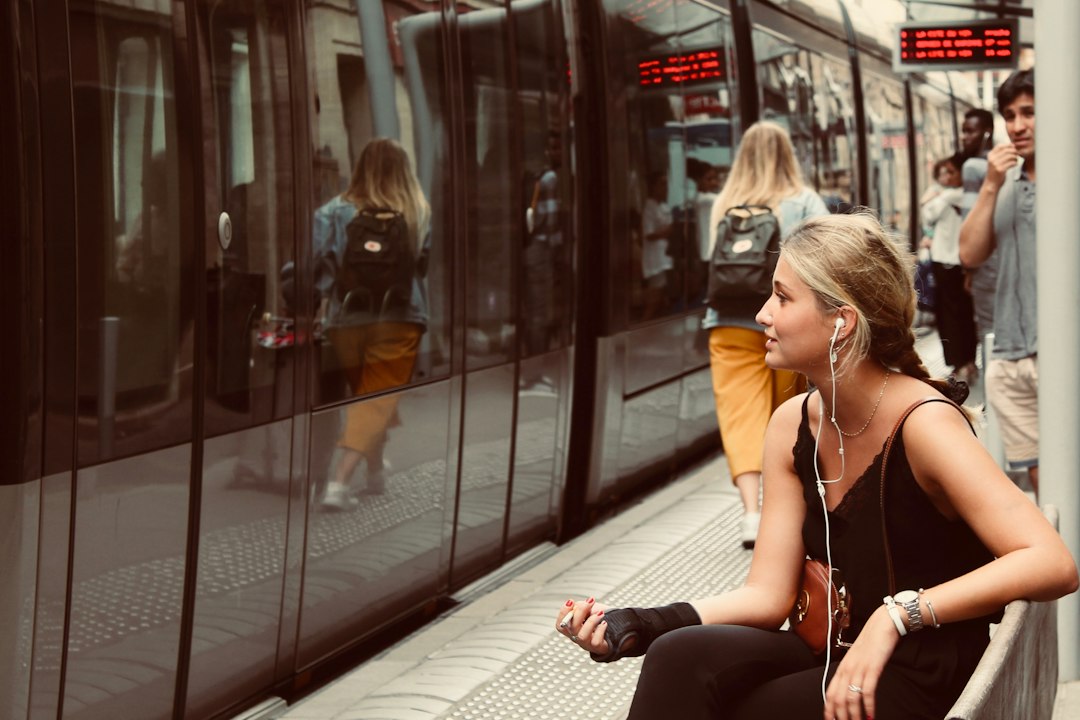
Some passengers reach into their bags for worn paperback novels, letting fictional worlds swallow the rhythmic clatter of the tracks. Others open small sketchbooks, capturing the sharp angles of a fellow commuter’s coat or the hazy reflection of streetlamps against a misty train window. Note-taking and quiet reflection offer a way to process lingering thoughts before the demands of the day take over completely. There is also the simple, unglamorous act of listening to the city pass by through a pane of glass. People watch the damp terraces of northern towns or the sprawling Victorian rooftops of the capital blur into a continuous ribbon of slate and brick. When the physical weight of the journey feels too heavy, simply daydreaming becomes a necessary survival tactic, a way to drift away from the stifling crush of bodies and the screech of braking wheels.
Of course, it is vital to acknowledge that not every transit hour feels poetic or restorative. Delays happen with stubborn regularity, ticket prices continue to rise, and the sheer physical proximity of strangers can fray even the calmest nerves. Navigating mixed-mode journeys involving a brisk walk, a delayed train, and a crowded underground connection can test anyone’s patience. Creativity research suggests that while unstructured cognitive wandering can sometimes spark unexpected ideas, it does not automatically turn a grueling journey into a masterpiece of personal growth (Smith et al., 2021). People are simply trying to survive the journey with their dignity intact. They are balancing the friction of modern routines with a deep-seated human desire to reclaim stolen moments for themselves, much like those who seek out quiet slowing down practices away from the rush.
Ultimately, these daily voyages remain entirely human experiences shaped by endurance rather than relentless self-improvement. Whether someone spends their trip listening to music, sketching a stranger, or staring blankly at a ticket barrier, the time belongs to them in a strange, unclaimed way. We might sigh at the delays and wince at the cost, but we continue moving between these two distinct worlds day after day. As the train pulls into the station and the doors slide open with a familiar hiss, we step out of the blur and back into the ordinary noise of our lives, carrying whatever small pieces of thought we managed to salvage along the way.
References

Department for Transport. (2023) Transport Statistics Great Britain: Commuting and Personal Travel Trends. London: DfT Publishing.
Office for National Statistics. (2022) National Time Use Survey: Understanding Daily Transit and Leisure Patterns. Newport: ONS.
Smith, J., Taylor, R., & Vance, M. (2021) Cognitive Wandering and Environmental Context in Transit Settings. Journal of Applied Psychology, 45(2), 112-128.