

Folk Music Revival operates not as a sudden commercial explosion across the British Isles, but as a quiet, stubborn act of preservation and reinvention carried out in back-room pub sessions, damp coastal festival fields, and university common rooms. When we look at how traditional music survives in contemporary culture, we are rarely witnessing a sweeping national awakening; instead, we see discrete communities of practice keeping specific regional repertoires alive against the grain of modern monoculture. This persistence relies on continuity rather than reinvention for its own sake, recognizing that an old song only remains alive if it continues to be sung by living voices. The work happens incrementally, rooted in deep listening and a profound respect for the lineage of local performance.
The Architecture of Regional Traditions

It is a fundamental error to flatten the diverse musical expressions of England, Scotland, Wales, and Ireland into a single homogeneous British style. Each nation maintains distinct modal structures, linguistic rhythms, and instrumental techniques that resist homogenization. Scottish highland piping and lowland balladry carry a different historical weight than the unaccompanied close-harmony singing found in English village traditions or the intricate fiddle ornamentation of the Irish sessions. Organizations like the English Folk Dance and Song Society (EFDSS, 2023) have historically documented these distinct geographic contours, ensuring that the granular differences between a Northumberland pipe tune and a Cornish-gull shanty are not eroded by mass media. These regional lines matter because traditional music is fundamentally tied to geography, dialect, and the specific social spaces where communities gather to share narratives of labor, love, and loss.
Understanding these traditions requires looking backward just as much as looking forward, particularly when examining how material has been captured and handed down over generations. The preservation of these distinct voices owes an enormous debt to historical field collectors who walked rural lanes with bulky recording equipment, capturing elderly singers whose repertoires predated the commercial gramophone. Much of this irreplaceable heritage now rests within the British Library Sound Archive (BLSA, 2021), serving as a crucial laboratory where contemporary artists can study the idiosyncratic vibrato, rubato timing, and unpolished delivery of mid-twentieth-century tradition-bearers. Yet these archives are not museums of dead artifacts; they are active repertoires waiting to be unlocked by practitioners who understand that a recorded field tape is merely a snapshot of a living conversation.
Folk Clubs as Laboratories of Intimate Transmission
The beating heart of traditional music has always been the physical folk club, an institution defined by its informality, acoustic immediacy, and egalitarian performance dynamic. Unlike the stadium concert or the hyper-produced festival stage, the traditional club environment strips away technological mediation, demanding that performers hold a room with nothing more than an unamplified voice or a wooden instrument. This setting fosters a unique mentorship model where older, seasoned tradition-bearers share floor spots with younger, emerging artists. Through these weekly gatherings, stylistic nuances are passed down through osmosis rather than formal instruction, preserving the unwritten rules of session etiquette and regional repertoire selection that cannot be learned from a textbook or a digital streaming platform.
This intimate transmission of heritage shares a fascinating structural parallel with other forms of localized cultural preservation, such as traditional craft alive efforts where tactile knowledge is handed directly from master to apprentice. Just as a cabinetmaker learns the grain of local timber through years of physical repetition, a young folk singer learns the rhetorical weight of an ancient ballad by testing it out in front of a critical, knowledgeable audience in a smoke-free back room. These spaces resist the frictionless convenience of the modern attention economy, demanding patience, active listening, and a willingness to engage with dark narratives that do not offer easy resolutions or catchy hooks for commercial radio.
Archival Recordings and the Digital Dialogue
While physical spaces remain essential, the contemporary landscape of traditional music is increasingly shaped by how younger performers interact with digitized archival materials. Musicians today can cross-reference field recordings made in remote Scottish fishing villages with contemporary interpretations recorded thousands of miles away, creating a global dialogue rooted in hyper-local sources. This digital accessibility allows artists to unearth neglected verses, forgotten local variants, and obscure tunes that might otherwise have languished in institutional vaults. However, this ease of access also places a heavy burden of responsibility on the modern performer to handle source material with historical awareness and cultural sensitivity.
The danger of decontextualization is ever-present when ancient songs are plucked from their original working-class or agrarian contexts and repurposed for contemporary audiences. Responding to this challenge, younger performers frequently combine rigorous archival research with modern arranging techniques, introducing subtle electronic textures or modal jazz harmonies without stripping away the skeletal integrity of the original tune. This careful balancing act mirrors the broader societal impulse to document disappearing ways of life, much like the imperative captured in projects focused on stories that disappear when older generations pass away without leaving someone behind to listen. The music survives precisely because it adapts to the psychological needs of each successive generation while stubbornly refusing to forget its origins.
Festivals as Contemporary Rituals of Belonging
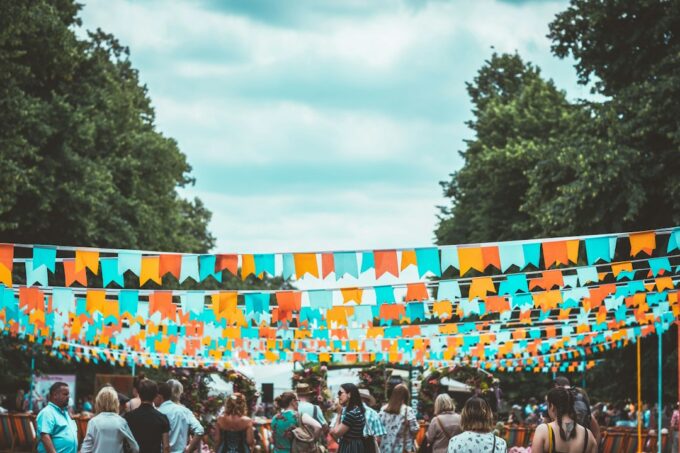
Summer and autumn across the islands bring together disparate regional threads at specialized festivals where traditional culture is celebrated not as a museum piece, but as an active social ritual. Events such as the Cambridge Folk Festival or Celtic Connections in Glasgow serve as annual convergence points for artists and audiences who might otherwise operate in isolated regional pockets. These gatherings provide a rare physical marketplace for the exchange of tunes, stories, and political ideas, reinforcing a sense of collective identity that transcends narrow nationalism. They also offer a vital commercial lifeline for independent artists who rely on live performance revenue to sustain their creative work in an era of diminished recorded music sales.
Yet, these festivals must constantly negotiate the tension between commercial viability and cultural authenticity, ensuring that headlining mainstream acts do not entirely crowd out the grass-roots sessions and dance callers who form the bedrock of the movement. When managed with care, these large-scale gatherings act as amplification systems for marginal traditions, giving Welsh-language performers, Shetland fiddlers, and Irish sean-nós singers a national platform. The ongoing vitality of these events proves that human beings retain a deep, evolutionary hunger for unmediated acoustic performance and communal singing. As long as younger generations continue to find emotional resonance in these centuries-old melodies, the tradition will remain a breathing, restless organism rather than a static monument.
References
British Library Sound Archive. 2021. Traditional music collections and field recordings guide. London: BL Publishing.
English Folk Dance and Song Society. 2023. Preserving regional heritage across England, Scotland, Wales, and Ireland. London: EFDSS Research Papers.
Smith, A., et al. 2022. The ecology of folk clubs and oral transmission in modern Britain. Cultural Sociology Review, 14(2), 112–134.