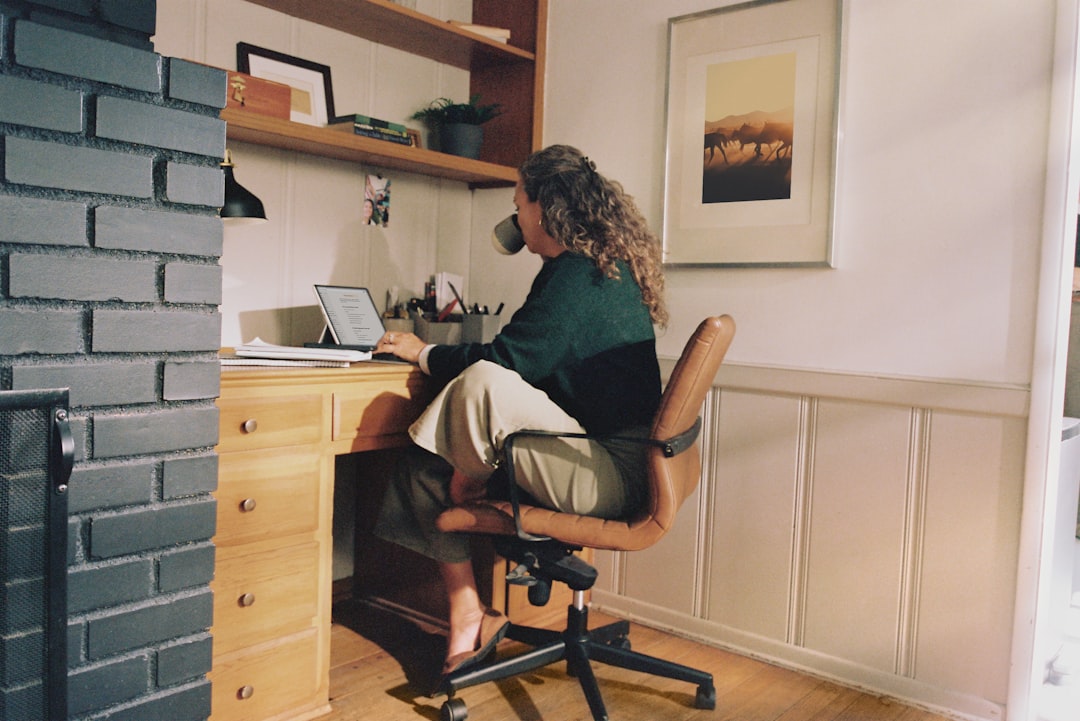
Working From Home Culture has become the quiet rhythm to which our modern British lives now beat, fundamentally altering the way we experience our own homes and our place within them. I often wonder if we fully grasped, in those early, chaotic days of transition, just how deeply this shift would settle into our bones. It is not merely a logistical change regarding commute times or digital connectivity; it is a profound transformation of the domestic landscape. The boundary between the place where we rest and the place where we labour has thinned to almost nothing, leaving us to navigate the psychological blur that follows.
For many of us, the kitchen table has evolved from a space of shared meals and conversation into a makeshift command centre. We find ourselves conducting meetings while the soft hum of the dishwasher provides a rhythmic backdrop, or catching glimpses of a partner’s workday through the peripheral blur of an open-plan flat. This proximity brings a new intimacy to our professional lives, yet it also demands a resilience we rarely speak of. We are learning to compartmentalise our stresses within the very rooms where we are supposed to seek sanctuary, a challenge that requires an almost constant act of emotional reframing.
The quiet moments in between tasks have become the new watercooler, though now the silence is filled by the kettle whistling or the sound of the rain against the windowpane. There is a peculiar solitude in this rhythm that can be both liberating and isolating. We no longer have the morning train journey to act as a decompression chamber, that essential buffer zone between the demands of the office and the needs of our families. Without those physical transitions, we are learning to construct internal boundaries, finding ways to signal to our minds that the day has truly begun—or, more importantly, that it has finally drawn to a close.
The Psychological Weight of Working From Home Culture
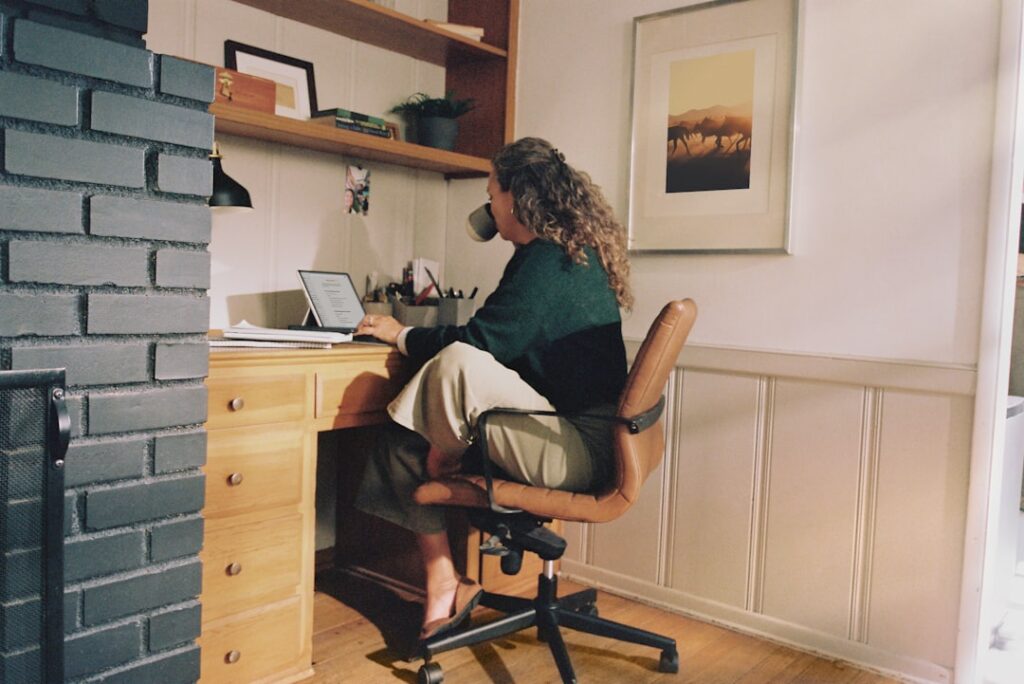
When we examine the psychological dimensions of this shift, we see that Working From Home Culture acts as a mirror to our values. The pressure to remain visible in a digital landscape often leads to a subtle form of tethered anxiety, where we feel we must always be reachable, always responsive, and always performing. This sense of urgency is rarely explicit, yet it permeates our evenings. We carry the weight of our pending emails into our leisure time, unable to fully shed the professional persona we have spent the day cultivating from the comfort of our sofas.
Yet, there is an undeniable beauty in reclaiming the time that was once surrendered to the sprawl of the city. Perhaps you have found space for a slow breakfast, or the ability to witness the afternoon light shift across your bookshelf. This reclamation of time is perhaps the greatest gift of our current reality. If you have been searching for a way to disconnect completely, perhaps you might find inspiration by exploring The Italian Riviera, where the pace of life offers a necessary contrast to our hyper-connected routines. Looking outward reminds us that our work is a part of our lives, not the entirety of it.
The absence of the traditional commute has also changed our relationship with our local communities. We are more present in our neighbourhoods, seeing the postman make his rounds or noticing the changing colours of the local park as the seasons turn. This reconnection to the immediate environment provides a sense of grounding that the office environment often lacked. We are becoming more anchored in the reality of our streets, which in turn offers a counter-balance to the ephemeral nature of our digital work lives. It is a slow, steady return to the tangible, even as our professional outputs remain increasingly ethereal.
We are, in essence, the architects of our own experience during this time. We are tasked with building rituals that protect our mental health, such as the deliberate act of closing a laptop, or perhaps taking a walk at the precise moment we would have arrived at our front door. These micro-rituals are the bulwarks of our sanity. Without them, the day melts into a singular, unending loop of obligation. By consciously designing our environment, we can reclaim a sense of agency that feels profoundly satisfying, even in the midst of wider global uncertainty.
The social cost of this evolution is perhaps the most complex aspect to navigate. We miss the spontaneous hum of human interaction, the non-verbal cues, and the shared camaraderie that naturally develops when people are forced into a common space. We are trying to replicate these connections through screens, but there is always a slight friction, a lack of the fluid spontaneity that makes human connection so rich. We are becoming more intentional about how we socialise, making concerted efforts to see friends rather than relying on chance encounters in corridors.
This intentionality may be the lasting legacy of the last few years. We are no longer sleepwalking through our professional and personal existence. Instead, we are constantly assessing whether our current setup serves our well-being or diminishes it. The discomfort that sometimes arises from the lack of traditional structure is often a prompt for growth. It forces us to ask what we truly need to feel balanced, motivated, and genuinely at peace within our own lives. It is a deeply personal inquiry, one that yields different answers for every single one of us.
As we continue to navigate this terrain, it is vital that we remain kind to ourselves. The transition to this new reality was not a single event but an ongoing process of discovery. We are still learning how to be at home while being at work, and how to hold both roles without letting one overwhelm the other. The goal, ultimately, is not to achieve perfect efficiency, but to find a rhythm that feels honest, sustainable, and entirely our own. In the quiet solitude of our home offices, we are finding our way toward a more deliberate kind of British life, one that values the richness of our daily experiences as much as the output of our professional endeavours. We are building something new, stone by stone, day by day, in the spaces where we choose to live and grow.
We must keep the conversation open, sharing the small victories and the common struggles that define this era. By acknowledging the human cost and the hidden benefits, we move past the simplistic narratives of productivity and into a more nuanced understanding of our lives. It is a journey of self-discovery that links us all, even from the separate corners of our living rooms. We are all participating in this experiment, learning to be present in our own lives in ways we never had to consider before, and that is a truly significant shift in our collective story.