

Home Style Cottagecore and the British Countryside Fantasy Online
Style

Cottagecore and the British Countryside Fantasy Online

Cottagecore and the British Countryside Fantasy Taking Over Social Media
Share

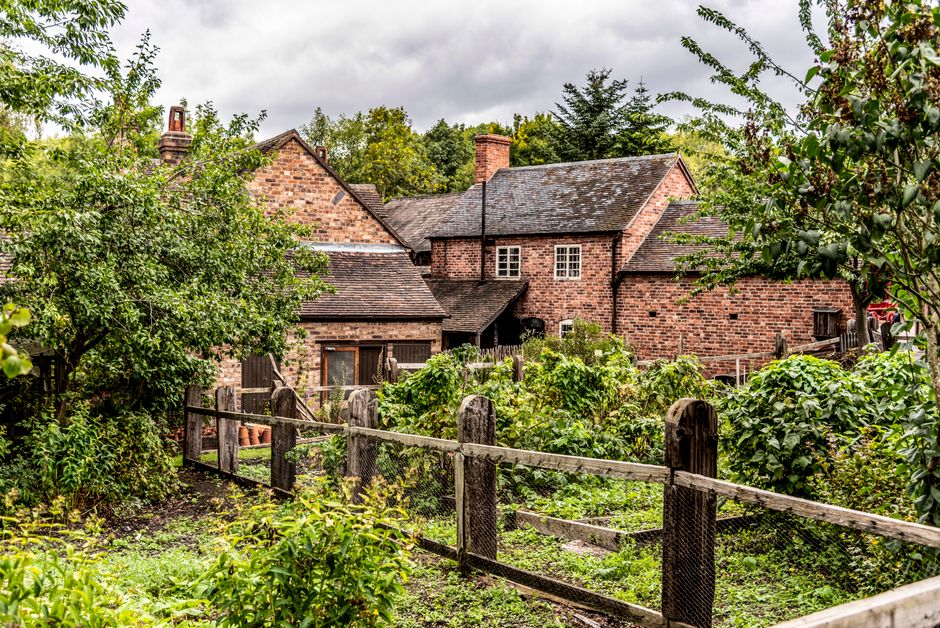
Cottagecore turns rural life into a visual language: floral dresses, old kitchens, wildflowers, bread, sewing, baskets and the suggestion of a slower daily rhythm. Its appeal is easy to understand, but the aesthetic becomes more interesting when separated from the claim that it represents how the countryside actually works.

The online version of rural Britain is selective. Mud, agricultural labour, transport problems, housing costs and weak services rarely photograph as well as an enamel jug on a windowsill. Cottagecore is therefore best understood as a fantasy of rural life rather than a documentary description of it.

Why the fantasy appeals

Many of its motifs offer an escape from speed and abstraction. Hand-making, gardening and cooking produce visible results. Old furniture and reused clothing can suggest continuity rather than constant replacement. Nature appears close at hand rather than something visited occasionally.

Those pleasures are real even when the surrounding image is highly curated.

Consumption dressed as simplicity

Cottagecore also contains a contradiction. An aesthetic built around simplicity can easily become another shopping category. Vintage dresses, artisanal ceramics and carefully distressed interiors can turn an imagined rejection of consumer culture into a new market.

That does not make every cottagecore interest insincere. It simply means that sewing, baking or gardening should be distinguished from buying objects that signal those activities.

The countryside beyond the feed

Real rural life varies enormously across Britain. Villages, market towns, farming communities and remote areas face different housing, transport and employment conditions. The countryside is not one timeless culture waiting outside the city.

Cottagecore remains useful as a cultural phenomenon because it shows what many people imagine they are missing: time, texture, nature and a sense that everyday tasks have visible meaning. The fantasy tells us less about rural Britain than about the pressures of the lives from which people are daydreaming.

Sources

  • V&A and fashion-history sources for dress and material-culture context.
  • DEFRA rural statistics for factual claims about contemporary rural Britain.
  • Current social-media trend claims only when supported by platform or independent research.
Written by
Stuart Callaghan

Stuart grew up in Glasgow and spent his twenties working in retail buying before realising the industry made more sense to him as a subject than a career. He moved to London, took a postgraduate diploma in journalism and began writing about fashion and design from a distinctly non-glossy angle — less catwalk, more high street; less celebrity, more craft. His work has appeared in style, culture and general interest publications and he has built a reputation for pieces that take fashion seriously without taking themselves too seriously. He lives in South London, dresses better than he admits and knows more about trainers than is probably healthy.

Editor's Pick

People

The School Run and Everything That Happens in Those Twenty Minutes

The school run begins long before anyone steps through the front door, often starting with the quiet click of a kettle and the...

Home

Maximalist Interiors and the Case for Having Exactly Too Much of Everything

Maximalist interiors begin not with an instruction manual or a shopping list, but with the quiet accumulation of a life lived in full...

Culture

British Landscape Painting and the Artists Still Finding New Ways to See Old Ground

British landscape painting has rarely been a simple exercise in passive observation; instead, it operates as a contested ideological space where national identity,...

Lifestyle

Downshifting and the People Who Traded Ambition for Something Quieter

Downshifting life begins the moment you realize that the ladder you have been climbing might be leaning against the wrong wall entirely. It...

Food

The Dinner Party and What Happens When People Actually Sit Down Together

The dinner party remains a fascinating social form that reveals much about how we live, connect, and negotiate our relationships in modern spaces....

Culture

Regional Accents and Why the Way We Speak Is Worth Protecting

Regional accents Britain communities rely on every day are much more than charming vocal habits or geographical souvenirs. They function as living, evolving...

Related Articles
Linen and Natural Fabrics and the Quiet Shift in How Britain Gets Dressed
Style

Linen and Natural Fabrics and the Quiet Shift in How Britain Gets Dressed

Linen and Natural Fabrics form the backbone of a quiet revolution taking...

Slow Fashion and the People Choosing Quality Over Everything Else
Style

Slow Fashion and the People Choosing Quality Over Everything Else

Slow Fashion Movement is redefining how we think about our wardrobes, moving...

The Capsule Wardrobe and Why Owning Less Has Become the Ultimate Style Statement
Style

The Capsule Wardrobe and Why Owning Less Has Become the Ultimate Style Statement

The capsule wardrobe is often sold as a moral crusade, but it...

Tattoo Culture and What Body Art Tells Us About Modern Identity
Style

Tattoo Culture and What Body Art Tells Us About Modern Identity

Tattoo Culture Britain has evolved from a fringe aesthetic into a widespread...