



Neighbourhood identity is rarely forged in town hall meetings or grand civic masterplans; instead, it accumulates slowly through the friction of daily life on British pavements. We live in spaces that constantly negotiate between the impersonal demands of the housing market and the stubborn human desire to leave a mark. Urban and suburban spaces across the United Kingdom reflect a complex interplay of demographic shifts, economic pressures, and deeply ingrained cultural habits. When we ask why a particular postcode feels distinct from the one just over the railway line, we are really asking how architecture, memory, and routine stitch together a collective sense of place. This phenomenon cannot be reduced to romantic notions of a vanished past, but must be examined through the material realities of contemporary living, where long-term residents, renters, and recent arrivals share remarkably different relationships to the same physical geography.
The Architecture of Routine and Public Space
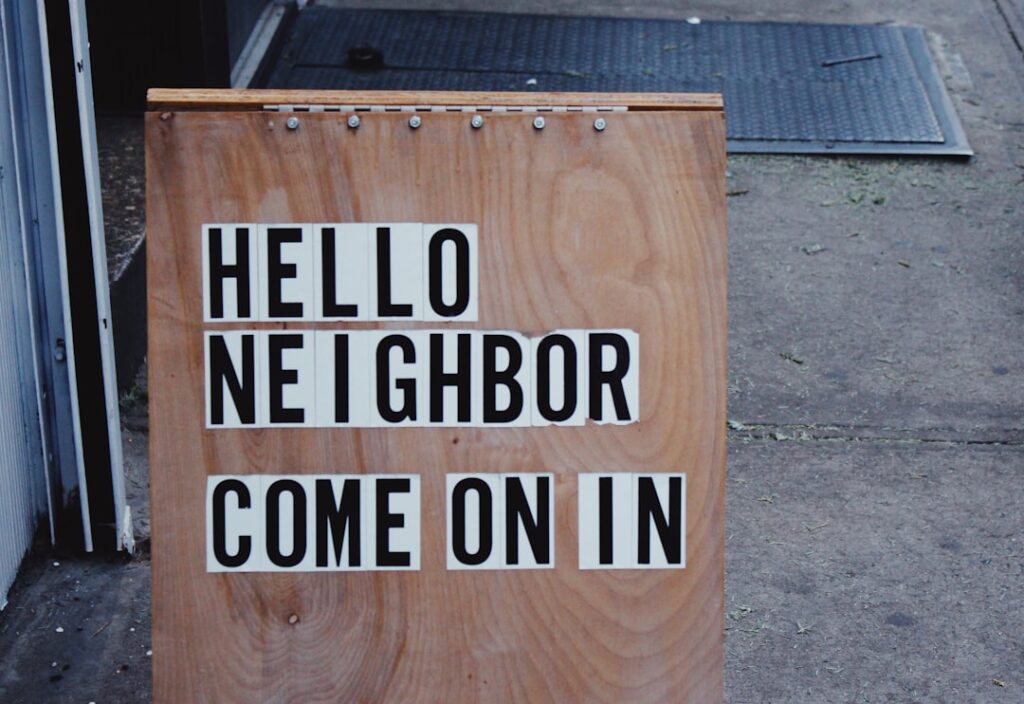
Physical structures set the boundaries of our daily movements, dictating how often we cross paths with our neighbours and how we perceive our immediate environment. British streets are lined with Victorian terraces, mid-century council estates, and sprawling new-build cul-de-sacs, each imposing a distinct choreography on those who inhabit them. A Victorian terrace with its front door opening directly onto the pavement invites a very different kind of casual surveillance than a suburban semi-detached house with a deep driveway and a brick wall. These built forms shape how neighbourhood identity is sustained through repeated encounters with other people, whether those meetings happen at the bus stop, the local park, or the corner shop. It is worth noting that the Centre for Cities has frequently examined how urban density influences social interaction and local economic vitality, demonstrating that physical design directly impacts how residents engage with their surroundings (Centre for Cities, 2021). Our routines—buying morning coffee, walking the dog, waiting for a delayed train—act as the mortar holding the social bricks together.
Public spaces function as the stage where the unwritten rules of British civic life are continually rehearsed and negotiated. The local park or high street is rarely neutral territory; it is a contested zone where differing expectations of cleanliness, noise, and behaviour collide. Long-term residents often view these public domains through the lens of accumulated history, remembering the shops that used to occupy certain corners and the trees that grew too large for their pavements. Newcomers, by contrast, look at the same park or high street with fresh eyes, evaluating its current utility rather than its nostalgic resonance. This friction between memory and fresh interpretation forms the core of a living local culture. Furthermore, the rhythm of transport networks—the commuter train pulling out precisely at 7:42 AM or the double-decker bus inching through narrow residential roads—establishes a collective pulse that binds individual schedules to a broader territorial identity.
Shops, Schools, and the Local Economy
Commercial infrastructure provides the tangible anchors that turn a collection of houses into a recognizable place with its own distinct character. The independent butcher, the crowded newsagent, and the charity shop do more than just sell goods; they serve as informal social hubs where information about the area circulates freely. In many British suburbs and urban centres, the high street remains the primary barometer of local health and social cohesion. When these commercial spaces are replaced by corporate chains or left vacant, the erosion of distinctiveness is palpable. Research from the Joseph Rowntree Foundation highlights how neighbourhood stability and local economic conditions are deeply intertwined, particularly regarding how housing precarity affects people’s ability to invest emotionally and practically in their local areas (Joseph Rowntree Foundation, 2020). When people feel secure in their tenure, they are far more likely to support local institutions and participate in community life.
Schools and educational facilities further entrench this sense of belonging, acting as institutional magnets for families and young professionals alike. The school run is a potent generator of local ties, creating structured opportunities for parents to converse, coordinate, and build mutual support networks outside the workplace. For many residents, understanding the catchment area of a local comprehensive or primary school is the single most important factor in mapping their relationship to the district. Yet, these institutions also highlight deep socioeconomic divides within the same borough or town. The experience of living in Britain today often means navigating stark inequalities in housing quality and local service provision, even between neighbouring streets. Understanding these dynamics requires a hard look at residential mobility data from organizations like the Office for National Statistics, which tracks how frequently different demographic groups relocate and how these patterns reshape the social fabric of British communities (ONS, 2022). Renters, for instance, move far more frequently than homeowners, a transient reality that changes how deeply roots can be planted in any given soil.
Divided Loyalties: Renters, Owners, and Newcomers
The contemporary British neighbourhood is rarely a monolith of shared experience; it is an overlapping patchwork of distinct cohorts with conflicting stakes in the future of the area. Homeowners who have lived in a terraced house for thirty years hold a different set of priorities compared to private renters who expect to move within eighteen months, or social housing tenants navigating the uncertainties of regeneration schemes. These tenure divisions fundamentally alter how neighbourhood identity is articulated and defended. While long-term residents may mobilize to protect local character against unwanted development, renters and newcomers might prioritize affordable housing, better public transport connections, and flexible amenities. These tensions are not evidence of a broken society, but rather the normal friction of urban and suburban life in motion.
Navigating these diverse perspectives requires abandoning the comforting myth that communities were once entirely harmonious before modern pressures intervened. People connect with their surroundings through practical necessity, shared grievances, and small, repeated acts of recognition. Engaging in brief everyday encounters with familiar strangers on the pavement helps soften the anonymity of modern living without demanding deep personal intimacy. Whether it is exchanging a nod with the postman or chatting briefly about the weather while queuing for a bus, these micro-interactions sustain a baseline feeling of safety and recognition. Ultimately, neighbourhood identity is not something we simply inherit from the past or passively consume; it is continuously built, contested, and remade through the ordinary habits of those who share the same patch of ground.
References
Centre for Cities. 2021. Urban Density and Economic Performance in British Cities. London: Centre for Cities Research Publication.
Joseph Rowntree Foundation. 2020. Neighbourhood Stability, Housing Tenure, and Poverty in the UK. York: JRF Reports.
Office for National Statistics (ONS). 2022. Internal Migration and Residential Mobility in England and Wales: Census Insights. Newport: ONS.