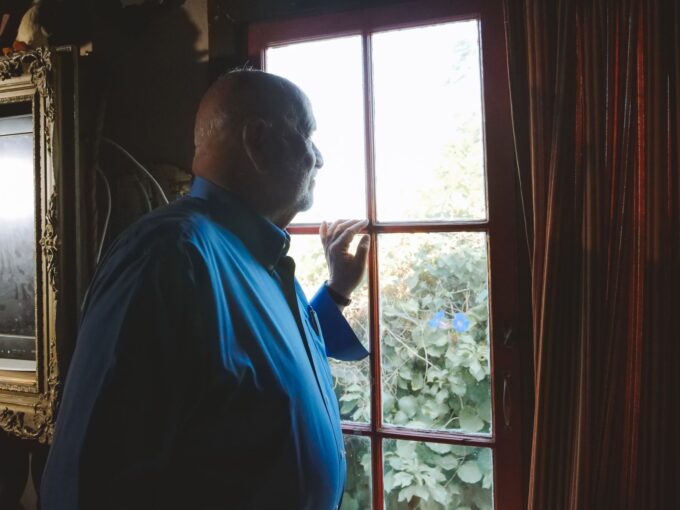



Friendship in adulthood often begins with a quiet realization on a Tuesday evening when your phone stays silent, save for a delivery notification. You look across the room and wonder when your social world shrank from sprawling university quadrangles or bustling office floors into a neat, manageable circle of zero. We tell ourselves that everyone is busy, that people are just caught up in the natural rhythm of growing older. Yet beneath that polite assumption lies a more complicated human truth about how we navigate connection as our lives diverge. It is rarely just one thing that pulls us apart from the people we love; rather, it is a slow accumulation of small shifts in daily existence.
When we examine why our social landscapes change so dramatically, we have to look closely at the sheer scarcity of time that defines modern maturity. Work demands stretch past traditional office hours, bleeding into evenings and weekends with quiet persistence. For many people, career ambitions require intense focus and emotional energy, leaving very little room left over for unstructured socialising. When you spend forty or fifty hours a week managing professional responsibilities, the thought of coordinating schedules across different postcodes can feel like another administrative task. We trade spontaneous coffee dates for meticulously planned catch-ups that must be squeezed in three weeks from Tuesday.
This reality is reflected in how households structure their days, a pattern well-documented by national administrative and social research. According to ONS time-use data, the hours available for leisure and social interaction shrink significantly as people take on greater domestic and professional burdens. People spend a vast portion of their waking hours working, commuting, and maintaining households, which inevitably leaves a narrow window for cultivating deep bonds. When you add the complexities of raising children, the logistical puzzle becomes even more intricate. Parents often find themselves tethered to school runs, extracurricular activities, and early bedtimes, making the kind of lingering social spontaneity of youth nearly impossible.
Parenting introduces a profound realignment of priorities and emotional availability. A new baby or a growing family demands a level of physical and mental presence that consumes almost the entirety of a person’s reserves. Even when parents desperately want to maintain their outside connections, the sheer exhaustion of daily caregiving acts as a heavy anchor. Friendships that once thrived on late-night phone calls or weekend road trips suddenly stall because one or both people are navigating the fog of sleep deprivation. Over time, these extended pauses in communication can create a strange, quiet distance, even when the underlying affection remains completely intact.
Relocation and changing geographical routines also play a powerful role in reshaping our social circles. Adults move across cities, counties, and countries for job opportunities, housing affordability, or simply a change of scenery. Every time we pack up our lives and settle into a new neighbourhood, we lose the organic proximity that makes meeting people feel effortless. In our younger years, proximity did much of the heavy lifting for us, placing us next to classmates or roommates day after day. In maturity, building that same sense of closeness requires deliberate, conscious effort, much like exploring neighbourhood identity to understand how a strange place eventually transforms into a comforting home.
Of course, geography is only part of the puzzle; the emotional risk of opening up as an adult introduces another layer of hesitation. When we are younger, friendships often form through shared proximity and shared confusion about the world, lowering our guard naturally. As we age, we accumulate history, baggage, and specific ways of moving through life that make us more protective of our inner worlds. Rejection hurts differently when you are older because you have fewer safety nets and more responsibilities. We weigh the potential vulnerability of sharing our true struggles against the safety of keeping conversations light and superficial, sometimes choosing isolation simply because it feels safer.
This emotional caution ties directly into the practical effort required to maintain ties over long distances and busy seasons. Anthropologist Robin Dunbar has explored the cognitive limits of human social networks, noting that while we might know many people, our capacity for meaningful relationships is naturally constrained. Dunbar (2021) suggests that time and emotional bandwidth act as finite resources, meaning we have to make active choices about where we direct our limited social energy. This does not mean there is a rigid, mathematical cap on how many people we are allowed to love or care about. Instead, it highlights a biological and psychological reality: maintaining deep bonds takes real, sustained attention, which is precisely why neglected connections eventually wither.
Recognising these structural and emotional hurdles can sometimes feel discouraging, as if distance and busyness are inevitable forces we are powerless to resist. Yet understanding that adult connection requires intentional maintenance changes the narrative from personal failure to a shared human challenge. We stop blaming ourselves for having fewer friends and instead begin to appreciate the quality of the ties that have survived the turbulence of our changing lives. Whether it is a quick text message that acknowledges a friend’s busy week or a scheduled call that takes place once a month without fail, these small gestures matter deeply. They prove that while the architecture of our social worlds may shift, the human desire for belonging remains entirely unchanged.
References

Dunbar R (2021) Friends: Understanding the Power of Our Most Important Relationships. London: Little, Brown Spark.
Office for National Statistics (ONS) Time Use Survey data publications regarding adult leisure, work patterns, and household responsibilities.