


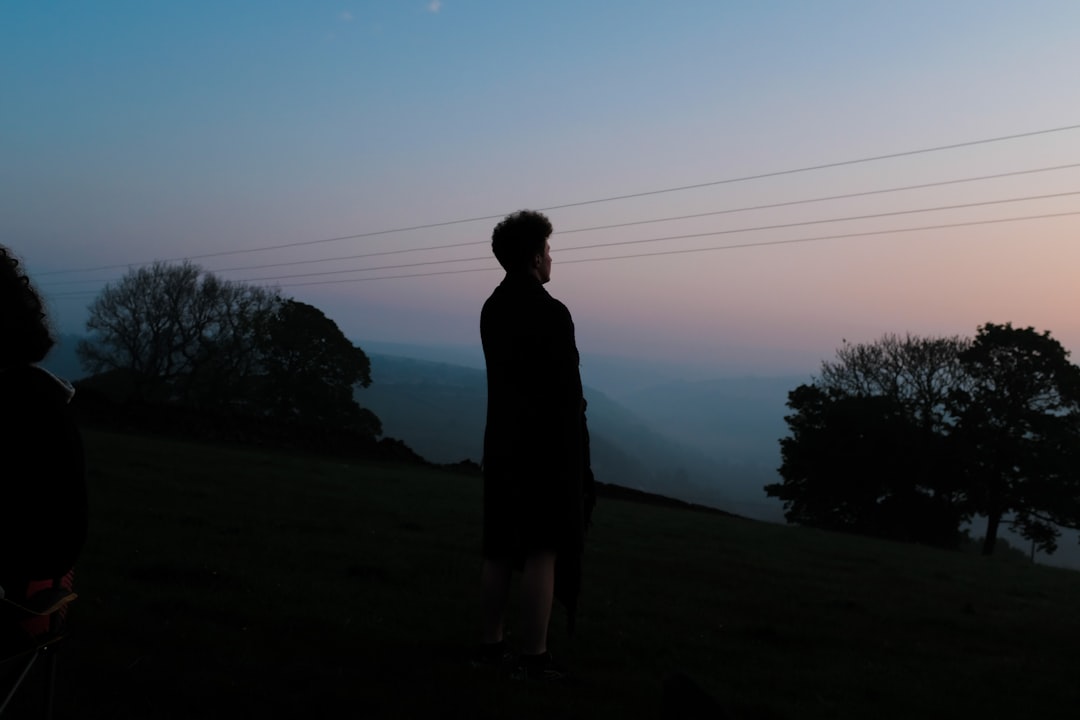
Loneliness epidemic UK statistics often flash across our screens like flickering neon lights, yet they fail to capture the heavy, silent weight of a Sunday afternoon spent in an apartment block where you know nobody’s name. We live in an age of hyper-connectivity, where a simple tap on a screen can bridge continents, yet many of us find ourselves reaching for a connection that remains stubbornly out of grasp. It is a peculiar, aching paradox that defines the lives of millions today. We are surrounded by thousands of voices, yet the sound of one’s own heartbeat in a quiet room can feel deafeningly loud.

When we speak of this pervasive feeling, we must remember that it is not merely a social inconvenience but a fundamental ache of the human spirit. John Cacioppo and William Patrick explored this deeply, noting that our evolution has hardwired us for companionship, making isolation a signal that something is amiss in our survival architecture (Cacioppo & Patrick, 2008). It is as visceral as hunger or thirst, a biological warning system that we are drifting too far from the safety of the tribe. Ignoring this signal is akin to ignoring a physical injury; it does not heal simply because we choose not to look at it.
The geography of our modern lives has shifted, often leaving us stranded in physical spaces that were designed for interaction but are now marked by polite avoidance. Many of us have felt the subtle fraying of community ties, particularly as the structure of our employment has shifted. For many, the quiet shift towards working from home has inadvertently removed the spontaneous, low-stakes social interactions that once punctuated our days. That brief conversation with a colleague near the coffee machine or the shared frustration over a delayed commute served a purpose. They were the small threads that held the wider social fabric together, and without them, the weave has become noticeably thinner.
It is worth considering how the nature of our social hunger manifests in the choices we make for our leisure. We often dream of escaping to the Italian Riviera, perhaps romanticising the vibrant piazzas where life is lived entirely in the public eye. There is a subconscious magnetism to these places because they represent the very opposite of our current state; they are spaces where the individual is seamlessly folded into the collective. We crave that ease of being, that permission to exist alongside others without the pressure to perform or the fear of being seen as an intruder in someone else’s social circle.
Human beings are essentially social creatures, and the necessity of belonging is the cornerstone of our mental landscape. Cacioppo and Patrick argue that the need for social connection is so deeply embedded in our biology that it influences everything from our immune function to our long-term cognitive health (Cacioppo & Patrick, 2008). When we view our isolation through this lens, it ceases to be a personal failing or a symptom of social awkwardness. Instead, it becomes a testament to the fact that we were never designed to weather the storms of life in total solitude. We require the mirror of another person’s presence to fully understand our own identity.
The difficulty lies in how we attempt to mend this fracture. We often mistake digital proximity for actual intimacy, believing that a string of comments or a curated feed of images can fill the void. However, the brain is an astute judge of what counts as true companionship. It can distinguish between the glow of a pixelated face and the warmth of a genuine shared moment. The loneliness epidemic UK society faces is not about a lack of people to talk to, but a lack of people to lean on when the world feels unexpectedly heavy or frighteningly uncertain.
Think back to the last time you felt truly understood. Perhaps it was a conversation in a dimly lit kitchen at three in the morning, or the simple comfort of sitting in silence with an old friend while the rain drummed against the windowpane. These moments are the antidotes to our isolation. They require a vulnerability that is often absent in our digital exchanges. To be known is to be seen in all our messy, imperfect reality, and that requires a level of courage that we are increasingly unpracticed at displaying in our day-to-day lives.
Furthermore, our modern architecture and urban design often work against the very thing we need most. We have built cities for efficiency, prioritizing ease of transport and private space over communal gathering points. In doing so, we have inadvertently cultivated a culture of isolation. When we step out of our front doors, we are often encouraged to keep our heads down and our pace quick. The barrier between “mine” and “yours” has become rigid, turning the communal areas of our housing estates or public parks into places of transit rather than engagement.
There is also a profound internal barrier we must overcome: the stigma attached to admitting we are lonely. It feels like a confession of inadequacy, a signal that we have failed at the most basic human task of building a tribe. Yet, as research highlights, social connection is not an optional luxury; it is a vital requirement for a thriving existence (Cacioppo & Patrick, 2008). Acknowledging our need for others is not a sign of weakness, but a recognition of our common humanity. It is the first step toward reclaiming a sense of belonging that has been eroded by the frantic pace of contemporary life.
The solutions do not need to be grand or expensive, as real connection usually happens in the mundane. It can be found in the deliberate choice to greet a neighbour, to participate in local clubs, or even to spend time in a library rather than behind a screen. It is about creating opportunities for serendipity. Every time we choose to engage with the world outside our own headspace, we are contributing to the deconstruction of the loneliness epidemic UK residents are currently navigating. It is a slow, quiet work, but it is deeply rewarding.
We must learn to trust the impulse to reach out. When we feel the sharp tug of isolation, we might instinctively retreat, fearing rejection or the awkwardness of a new introduction. However, the most profound changes in our lives often start with a hesitant “hello” or a brief, genuine question asked of a stranger. These small gestures are the seeds of community. They remind us that we are part of a larger whole, regardless of how fractured our daily experiences might feel in the moment.
Ultimately, the way forward is to be more present in the lives of those around us, even when it feels like there is no time. We must protect our face-to-face moments with the same vigilance we guard our work hours. By prioritizing the human experience, we begin to heal the collective fracture. We find, perhaps to our own surprise, that the person sitting next to us on the bus or standing in line at the shop is likely grappling with the very same quiet questions we carry ourselves. In that mutual recognition, the loneliness begins to lose its hold.
References
Cacioppo, J. & Patrick, W. (2008). Loneliness: Human Nature and the Need for Social Connection. W.W. Norton & Company.